SPRING 2026


Splash Biography


MADISON BUTCHKO, Aspiring Writer and Physicist


Major: Physics/ East Asian Studies

College/Employer: Yale

Year of Graduation: 2026

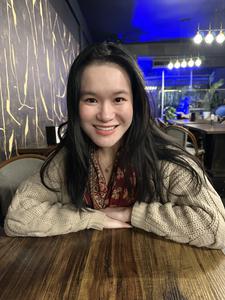
Picture of Madison Butchko

Brief Biographical Sketch:

Madison Butchko is a physics and East Asian studies major with a passion for both scientific inquiry and storytelling. Her most recent research focuses on Physics-Informed Neural Networks (PINNs) and their applications in computational modeling of volcanoes. Beyond research, she writes personal essays and fictional stories.

Madison enjoys baking, playing classical piano, drawing, and calligraphy, often creating intricate mandalas. She loves exploring and taking long walks. Above all, her curiosity fuels her love for speculative fiction, where she weaves together science, religion, and storytelling to explore profound questions about the human experience.


Past Classes

  (Clicking a class title will bring you to the course's section of the corresponding course catalog)

E5432: Writing about Oneself: The Personal Essay in Sprout Spring 2026 (Apr. 11 - 12, 2026)
How do you write about yourself? What does that look like in the form of an essay? You will learn how personal experience can be shaped into a meaningful, well-structured narrative. We will break down the key elements of the personal essay– structure, voice, scene, reflection, and narrative arc– and discuss how these elements work together to tell a compelling story drawn from one’s life. This course distinguishes between different forms of the personal essay, including the college application essay and the literary personal essay. For students applying to college, we will discuss and break down how to write the Common App essay. Afterwards, we will study literary personal essays by writers such as Joan Didion, James Baldwin, and Annie Dillard to understand how personal experience becomes literature through structure, language, and insight. The personal essay is where writers express their own experiences and develop their voice, creating a space for lived experiences to be shared and valued.


E5433: How to Be Curious and Creative: Writing the Character in Sprout Spring 2026 (Apr. 11 - 12, 2026)
Every character begins with a question. Who are they? What do they want? What are they afraid to admit, even to themselves? This creative writing class is all about learning to write with wonder. We’ll explore how curiosity sparks imagination, and how asking the right questions can turn vague ideas into characters that feel real. Through fast-paced prompts, strange scenarios, and collaborative discussion, you’ll practice inventing characters who surprise you. People who feel like someone you’ve known forever, or someone you’re just beginning to figure out. Whether you’re a writer, a thinker, or just someone who loves a good story, this class invites you to write from a place of play, intuition, and discovery!


C5434: Fiction as a Thought Experiment: Science, Government, and Ethical Imagination in Sprout Spring 2026 (Apr. 11 - 12, 2026)
What if storytelling could shape the future? This course explores how speculative fiction connects science, government, and ethics, using storytelling to imagine new possibilities and engage with real-world dilemmas. Students will learn the mechanics of great storytelling—plot, structure, and world-building—while analyzing how fiction can communicate scientific ideas, challenge political systems, and spark meaningful conversations about the world we live in and the futures we might create.


E5435: Thinking Clearly, Writing Analytically in Sprout Spring 2026 (Apr. 11 - 12, 2026)
We learn how to write analytically by approaching writing as a system of thinking. We develop clear arguments, build logical connections, and create purposeful structures for essays. We focus on how ideas move from observation to claim, and how evidence supports analysis. By the end of our class, we learn how to structure ideas, strengthen reasoning, and use writing as a tool to understand our thinking and generate new ideas.


H5322: How to Write About Yourself: The Personal Essay in Splash Spring 2026 (Feb. 28, 2026)
How do you write about yourself? What does that look like in the form of an essay? You will learn how personal experience can be shaped into a meaningful, well-structured narrative. We will break down the key elements of the personal essay– structure, voice, scene, reflection, and narrative arc– and discuss how these elements work together to tell a compelling story drawn from one’s life. This course distinguishes between different forms of the personal essay, including the college application essay and the literary personal essay. For students applying to college, we will discuss and break down how to write the Common App essay. Afterwards, we will study literary personal essays by writers such as Joan Didion, James Baldwin, and Annie Dillard to understand how personal experience becomes literature through structure, language, and insight. The personal essay is where writers express their own experiences and develop their voice, creating a space for lived experiences to be heard, shared, and valued.


H5323: Thinking in Systems: How We Learn in Splash Spring 2026 (Feb. 28, 2026)
This course focuses on learning how to learn by learning how to think. Learning goes beyond absorbing information; it is a perspective and a thought process. In this course, we will examine what that thought process looks like, how it works, and how to apply it to learning anything. We will break down learning into a repeatable framework: observing many examples, identifying patterns, creating structure, and building systems that can be reused across any discipline. Throughout the course, I’ll share examples from my own learning, from art and math to writing, to show how this approach works in practice. We will also discuss what learning looks like today, where it is headed, and why learning how to learn matters, especially in the age of AI. Drawing on my teaching experience, I believe education is one of the strongest paths to true societal equality and that with the right learning mindset and processes, anyone can learn and become an expert in their desired field.


X5324: A Scientific Approach to Cooking and Baking Without Recipes in Splash Spring 2026 (Feb. 28, 2026)
Do you want to learn how to cook and bake without relying on a recipe or having every exact ingredient on hand? Have you ever opened a recipe, pulled out all your measuring cups, realized you were missing one ingredient, and felt like you couldn’t make the dish at all? This course teaches you how to truly cook and bake without recipes and the perfect measurements. We’ll focus on fundamentals: ratios, flavors, spices, techniques, and how to eyeball ingredients so you can make almost anything with what you already have in your kitchen. We’ll use a scientific learning process to understand how cooking actually works. You’ll learn how to read a recipe to identify its foundation, how to adjust it to your taste, how to fix mistakes as you cook, and how to understand the components that make a dish good. The goal is to help you cook for your taste, replicate what you like, and make something delicious from any in your kitchen.


E5282: How to Be Curious and Creative: Writing the Character in Sprout Fall 2025 (Nov. 15 - 16, 2025)
Every character begins with a question. Who are they? What do they want? What are they afraid to admit, even to themselves? This creative writing class is all about learning to write with wonder. We’ll explore how curiosity sparks imagination, and how asking the right questions can turn vague ideas into characters that feel real. Through fast-paced prompts, strange scenarios, and collaborative discussion, you’ll practice inventing characters who surprise you. People who feel like someone you’ve known forever, or someone you’re just beginning to figure out. Whether you’re a writer, a thinker, or just someone who loves a good story, this class invites you to write from a place of play, intuition, and discovery!


E5284: Rebellion in Fiction: How Literature Speaks Against Power in Sprout Fall 2025 (Nov. 15 - 16, 2025)
This course explores how literature can confront injustice, question authority, and illuminate the structures that shape our lives not through argument but through imagination. From 1984 to The Handmaid’s Tale, we will study how storytelling becomes a form of rebellion, allowing readers to think critically about society without feeling divided by ideology. Students will learn how fiction can expose power, provoke empathy, and turn resistance into art, crafting stories that speak with both courage and compassion.


H5178: Reading People: Literature as a Window into the Human Mind in Splash Fall 2025 (Oct. 04, 2025)
What does it mean to know someone? This class uses literature and writing as a lens to explore human behavior, motivation, and emotion. From ancient myths to contemporary fiction, stories allow us to enter other minds—not just observe people, but feel what it’s like to be them. Through short readings, discussions, and creative exercises, we’ll study what makes a character believable: their contradictions, silences, impulses, and decisions. We’ll also experiment with low-stakes acting and improv to get inside a character’s body and voice before writing. By the end, students will craft scenes and characters that feel psychologically rich and layered.


H5179: How to Be Curious and Creative: Writing the Character in Splash Fall 2025 (Oct. 04, 2025)
Every character begins with a question. Who are they? What do they want? What are they afraid to admit, even to themselves? This creative writing class is all about learning to write with wonder. We’ll explore how curiosity sparks imagination, and how asking the right questions can turn vague ideas into characters that feel real. Through fast-paced prompts, strange scenarios, and collaborative discussion, you’ll practice inventing characters who surprise you. People who feel like someone you’ve known forever, or someone you’re just beginning to figure out. Whether you’re a writer, a thinker, or just someone who loves a good story, this class invites you to write from a place of play, intuition, and discovery!


E5109: Fiction as a Thought Experiment: Science, Government, and Ethical Imagination in Sprout Spring 2025 (Apr. 05 - 12, 2025)
What if storytelling could shape the future? This course explores how speculative fiction connects science, government, and ethics, using storytelling to imagine new possibilities and engage with real-world dilemmas. Students will learn the mechanics of great storytelling—plot, structure, and world-building—while analyzing how fiction can communicate scientific ideas, challenge political systems, and spark meaningful conversations about the world we live in and the futures we might create.


E5110: : Classified Science: The Government, Secrecy, and Scientific Research in Sprout Spring 2025 (Apr. 05 - 12, 2025)
From the Manhattan Project to MKUltra, from DARPA’s futuristic technologies to the classified world of aerospace research, government-funded science has shaped history in ways most of us will never know—because much of it is classified. This course explores the intersection of science, government, and national security, analyzing how scientific breakthroughs have been driven, controlled, and sometimes hidden by state power. Through analysis of real-world examples, discussions on government documents, and ethical debates, students will gain insight into how science both enables and is constrained by political and security concerns. Whether you're interested in physics, espionage, or policy, this class will uncover the hidden world where science and secrecy collide!


A5101: The Future Written Before Us: Science Fiction’s Influence on History and Innovation in Splash Spring 2025 (Mar. 02, 2025)
What if I told you that Star Trek helped invent the cell phone, or that 1984 predicted our surveillance culture? Science fiction isn’t just about wild ideas—it shapes the way we think about the future, and sometimes, it even creates it. In this class, we’ll explore how sci-fi has influenced real-world science, from AI and space travel to climate change and bioengineering. We’ll dive into utopian dreams, dystopian nightmares, and apocalyptic warnings to see how they reflect (and sometimes steer) history. Along the way, we’ll debate whether sci-fi is just good storytelling or a self-fulfilling prophecy. Expect thought-provoking discussions, fun creative exercises, and a deep dive into the power of storytelling to shape what comes next.